
The Sauna – From Mysterious Earth Pits to Luxurious Temples of Regeneration: A History Full of Surprises
The Sauna – From Mysterious Earth Pits to Luxurious Temples of Regeneration: A History Full of Surprises
The Sauna – From Mysterious Earth Pits to Luxurious Temples of Regeneration: A History Full of Surprises
More than 2,000 years of tradition, remarkable rituals, secrets of the ancient peoples of the North and diplomacy conducted on wooden benches. The sauna is much more than a way to warm up the body. It is a fascinating part of European cultural history that, over the centuries, has become a symbol of regeneration, harmony and mindful rest.
For some, it is a way to warm up after a winter walk; for others, a regular ritual of relaxation and renewal. Today, modern sauna facilities are associated with luxurious wellness areas, aromatic sessions and a unique atmosphere of relaxation. But the sauna's beginnings were completely different: rough, smoky and full of mystery.
Few people know that for centuries the sauna served purposes that a modern visitor might not expect. It was not only a place for bathing, but also a place for giving birth, healing, family gatherings and even for saying a final farewell to the dead.
From Earth Pit to Sacred Place of the North
The history of the sauna goes back more than 2,000 years, and its traditions took the deepest root in northern Europe, above all in what is now Finland and the Baltic countries.
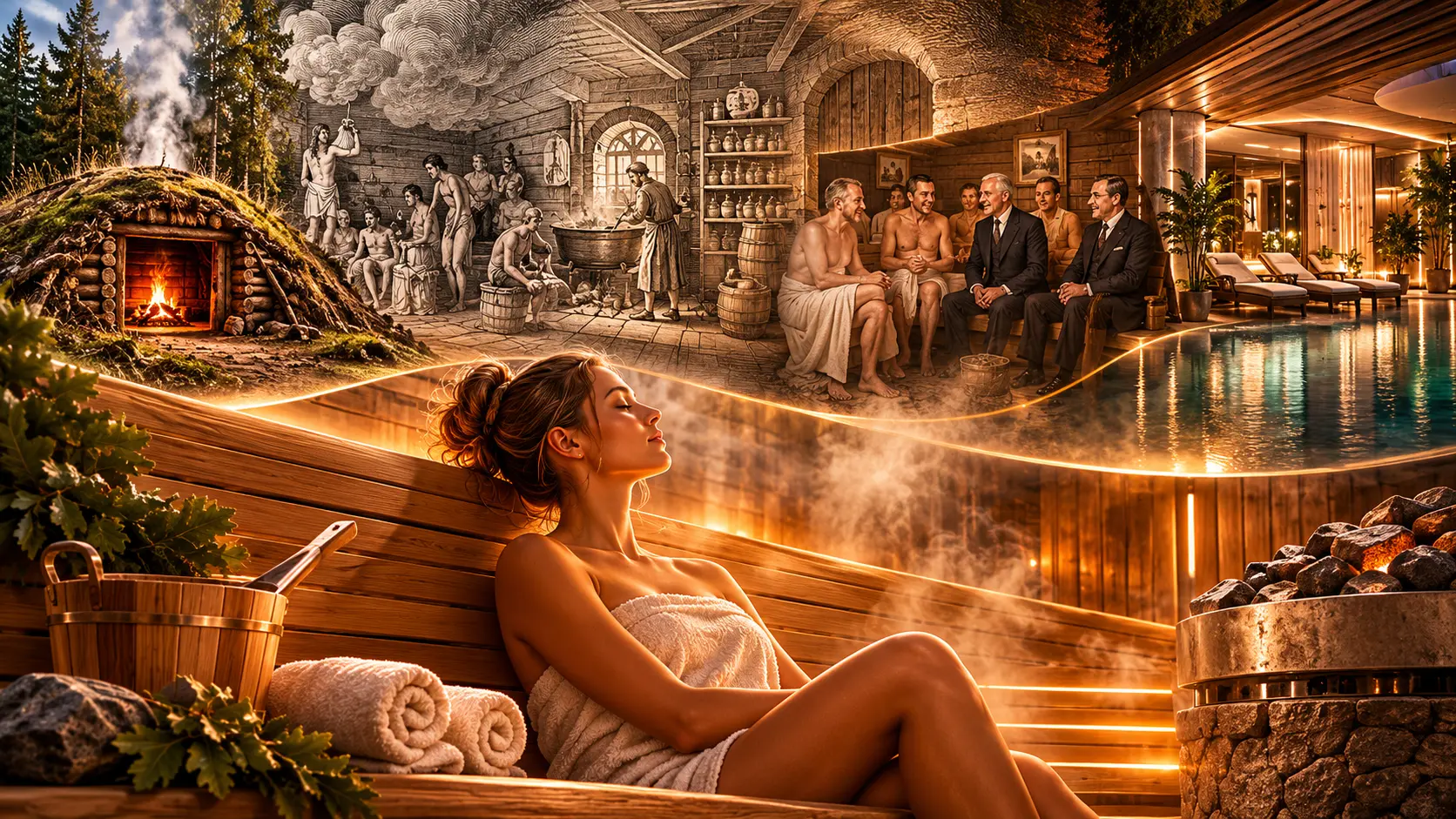
The first saunas bore little resemblance to today's wooden cabins. They were simple earth pits, often dug into hillsides. Inside, a pile of stones was built over a fire. Chimneys were not yet known, so the space filled with thick smoke. Only once the fire had died down and the room had been thoroughly aired could bathing safely begin.
For the ancient inhabitants of the North, the sauna was a special place, treated with almost sacred respect. It was considered one of the cleanest places in the entire settlement. It was there that women gave birth, the sick were tended to, and the dead were prepared for burial.
Special rules applied inside. Silence, calm and mutual respect were held almost sacred. Arguing, swearing or improper behaviour was considered unacceptable. The sauna was more than just a room for bathing – it was an important part of social and spiritual life.
When Did the Sauna Become a Male Space?
For many centuries, sauna bathing in Finland and other parts of northern Europe was primarily a family and community activity. Both men and women used the sauna, and how bathing was organised depended on local traditions.
A clearer division into men's and women's spaces developed with urbanisation and the growth of public bathhouses in the 19th and 20th centuries.
In European and North American cities, where the sauna tradition was brought by Scandinavian immigrants among others, steam baths and saunas became popular social meeting places. In some countries, in line with the social norms of the time, facilities were built exclusively for men.
These were clubs of a kind, where people not only relaxed but also discussed business, politics and current affairs.
A particularly interesting phenomenon was Finnish sauna diplomacy. Finnish President Urho Kekkonen was famous for holding informal political talks in the sauna. His guests included foreign leaders, among them Nikita Khrushchev.
The idea was simple: in the sauna, official attire, distance and some of the diplomatic conventions disappeared. What remained was direct conversation, which often helped build trust.
The Electric Revolution That Changed the World of Saunas
The real technological breakthrough came in the 20th century. The development of electric sauna heaters made using a sauna much easier and more accessible.
There was no longer any need to light a traditional fire, wait for the wood to burn down or clear smoke from the room. Modern solutions made it possible to install saunas in hotels, sports clubs, holiday resorts and private homes.
Over time, the sauna ceased to be solely a part of the traditional culture of the North. It became part of the global wellness market and of a mindful approach to rest.
Today, modern sauna facilities offer much more than simply warming up. You can find Finnish saunas, steam rooms, infrared saunas, cooling areas, pools, relaxation spaces and professionally prepared sauna rituals.
One especially popular ritual is the Aufguss – a session led by a sauna master, using water, aromatic essential oils and special techniques for circulating hot air with a towel or fan.
This combination of heat, scent, music and carefully planned choreography turns a traditional bath into a unique sensory experience.
4 Fascinating Facts from the World of Saunas
1. Germany – a Sauna Culture Powerhouse
Although Finland is the historical home of the sauna, Germany today has one of the most highly developed cultures of public sauna facilities. Great importance is attached there to the rules of proper sauna use, including textile-free zones. In Finland, meanwhile, the sauna remains an inseparable part of everyday culture – the country has several million saunas.
2. Saunas in the World's Most Extreme Places
Saunas can be found in truly surprising locations. They have been built in Finnish mines, at research stations in Antarctica, and on board ships and naval vessels. Even in the most remote corners of the world, people have managed to create a space for rest and regeneration.
3. Saunatonttu – the Mysterious Guardian of the Finnish Sauna
Old Finnish beliefs feature the saunatonttu, a spirit or elf that looks after the sauna. It was said to keep order, protect the place from misfortune and ensure safety. People believed it had to be treated with respect, as improper behaviour could anger the mysterious guardian.
4. The World Championships That Showed the Limits of Endurance
For years, Finland hosted the unusual World Sauna Championships. Participants competed to stay as long as possible in extremely high temperatures of around 110°C. The competition was ended after a tragic accident during the 2010 final. The event served as a reminder that the sauna should be a place of mindful rest, not dangerous competition.
The Sauna – A Timeless Tradition
From the smoky earth pits of the ancient peoples of the North to modern wellness complexes, the history of the sauna shows what a remarkable journey this form of relaxation has made.
Technologies, materials, equipment and ways of using heat have changed, but one thing has remained the same: the need to stop, quiet the mind and take a moment for oneself.
In a world full of haste, the sauna still reminds us that true luxury does not always mean opulence. Sometimes it is silence, warmth, calm and the chance to escape from everyday life.
The sauna is not just about temperature. It is culture, history, ritual and the art of mindful rest.
With a passion for sauna culture, tradition and the art of regeneration.
S&G | SaunaGalla
The elegance of warmth. The culture of relaxation. A passion for the sauna.